For Home Assistant

Climate schedules that follow how your home actually works.

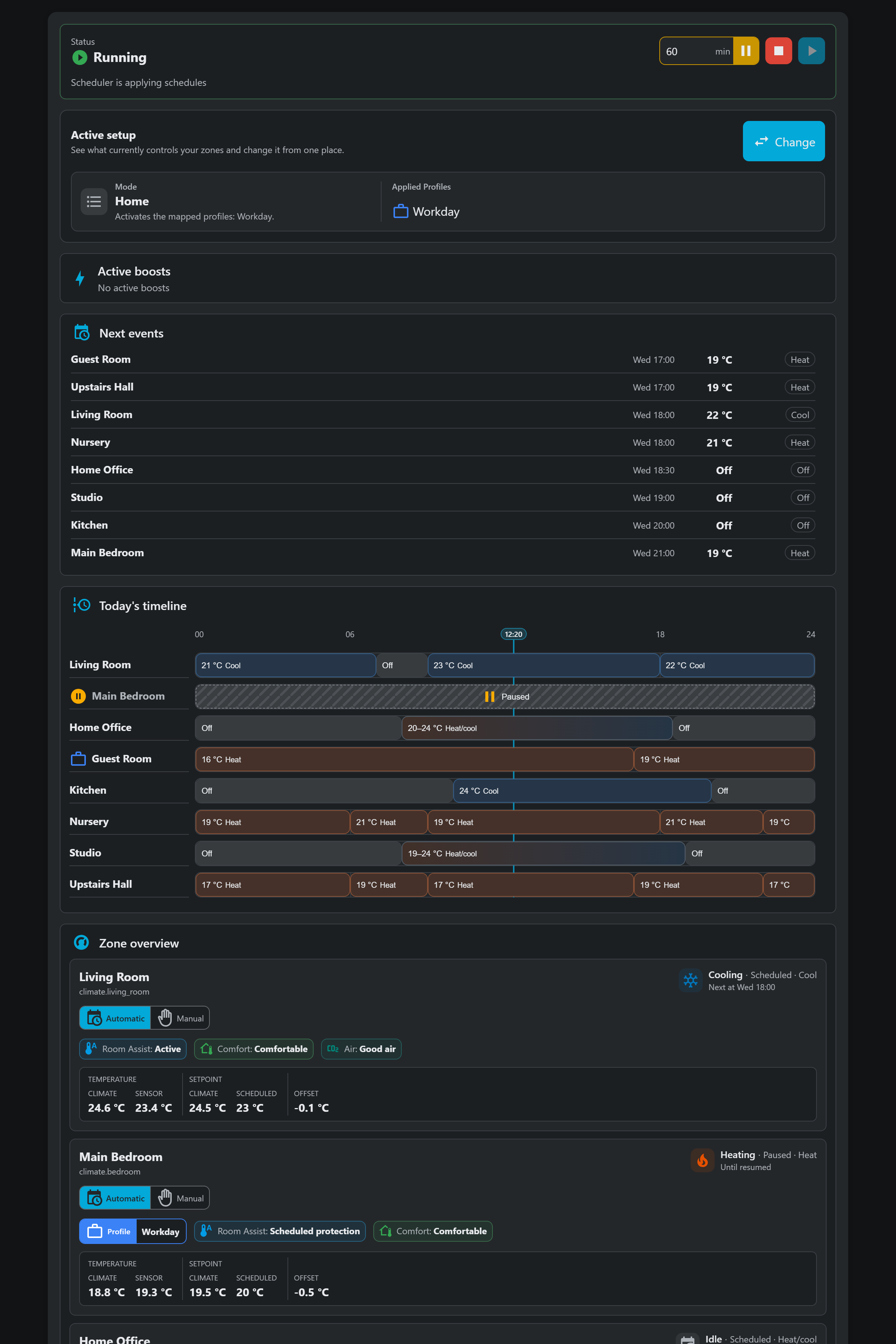
Velair adds weekly scheduling to the climate.* entities already in Home Assistant, with one panel for planning the week and seeing what is active now.

  • Local-firstNo Velair cloud or account
  • Event-drivenReacts to Home Assistant changes
  • Heating & coolingSingle targets and ranges
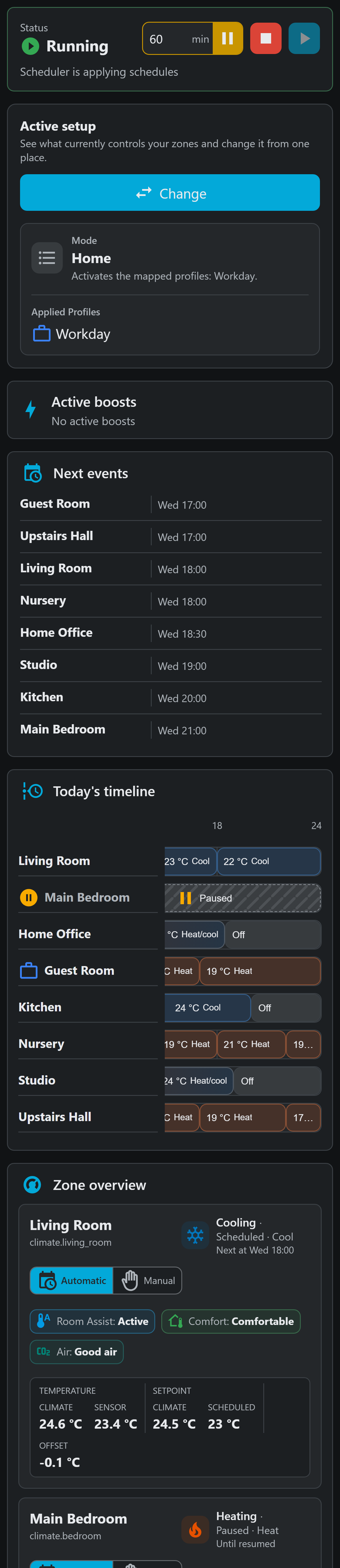
Velair Overview showing scheduler status, active setup, timeline and climate zones
Deterministic demonstration data · no private Home Assistant information

Core workflow

Set the week. Change the routine when life changes.

Your weekly schedule stays as the baseline. Profiles, Modes, pauses and Boosts can change what should happen now without making you rebuild it.

01

Visual weekly schedules

For each period, choose a start time, HVAC mode, temperature or native heat/cool range, and any supported climate options. That block stays active until the next one begins.

Read the scheduling guide
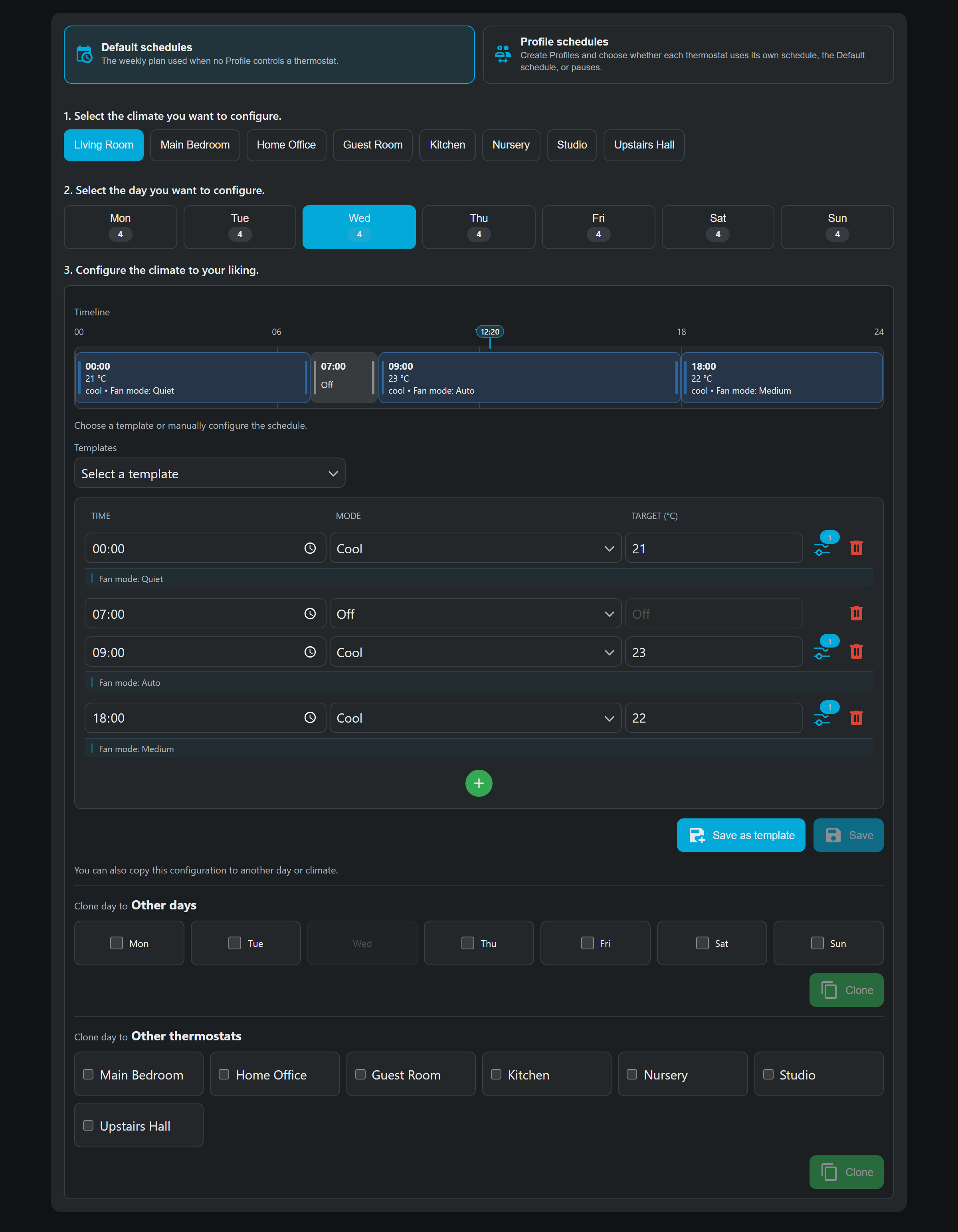
Velair visual schedule editor with a daily timeline and climate blocks
02

Profiles and Modes

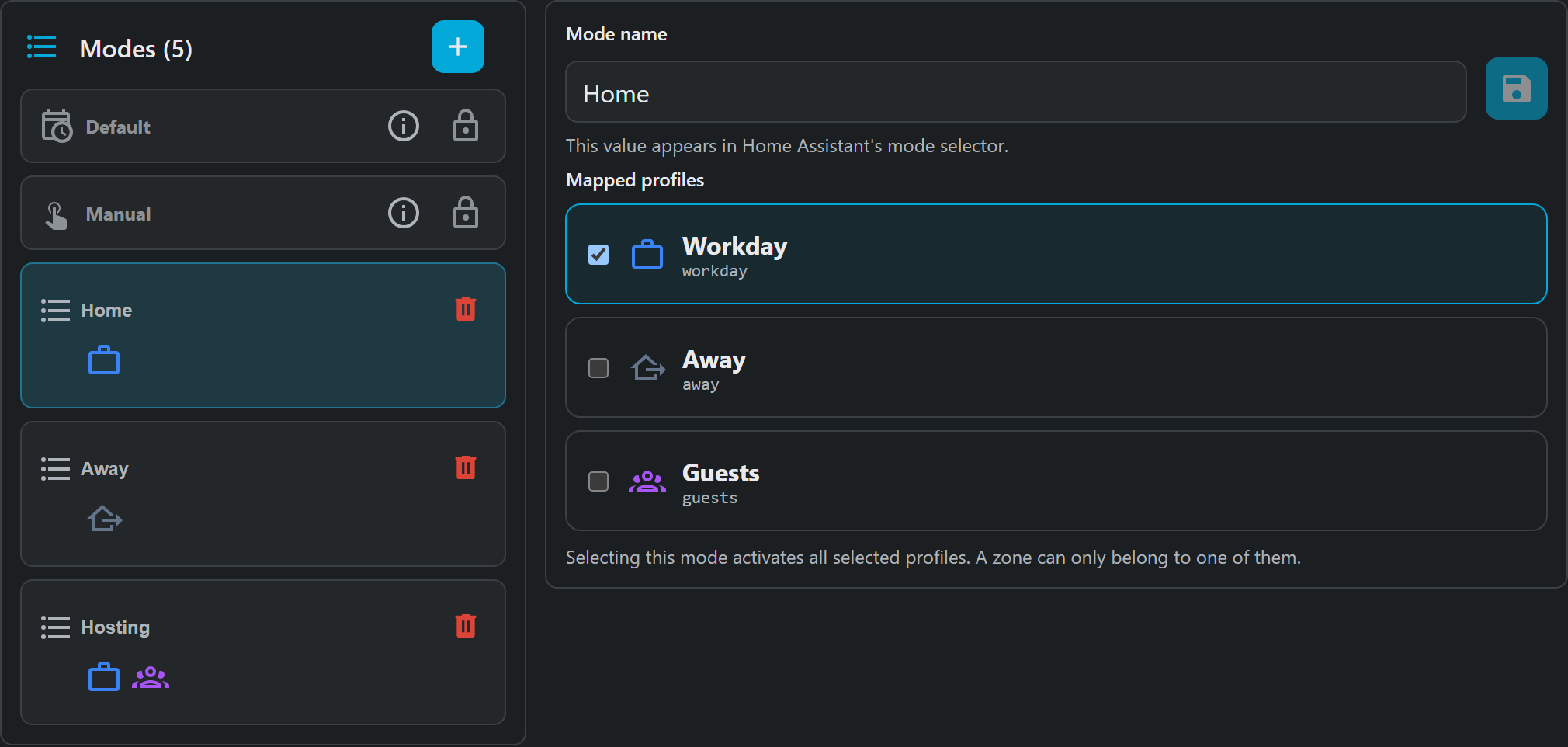
Reuse named schedules such as Workday, Away or Guests, then group them into a Mode that coordinates several zones.

Velair Modes editor mapping a Mode to reusable Profiles
03

Designed for the sidebar

The main experience adapts to desktop, tablet and phone. The optional Lovelace card uses the same backend-owned configuration.

Velair responsive Overview on a phone

Optional room sensor control

Room Assist makes the external sensor visible.

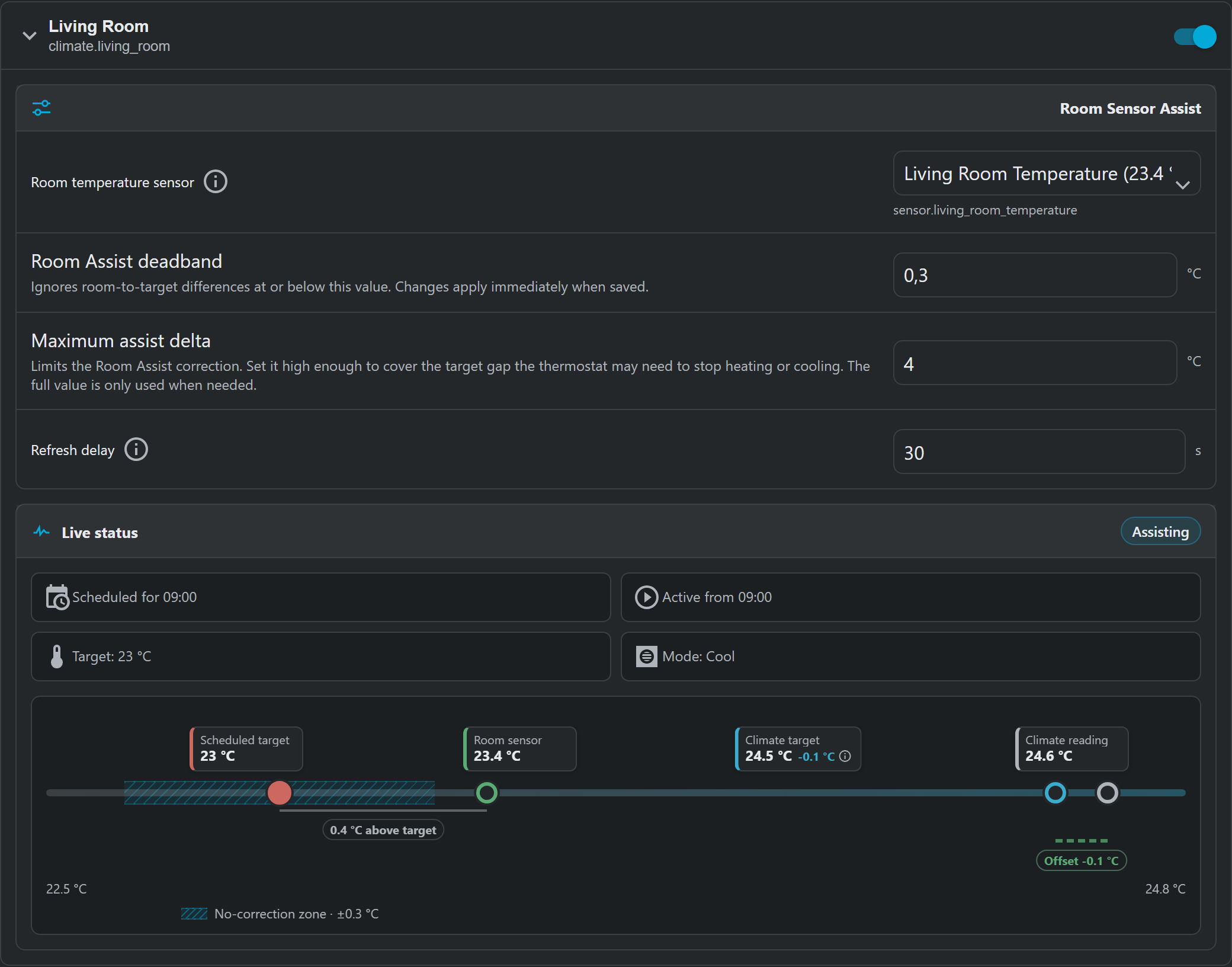
When a wall thermostat does not represent the room well, Room Assist temporarily adjusts its target using a separate temperature sensor. The graph shows the scheduled target, room reading, climate reading, applied target and current state.

Room Assist graph while assisting a cooling zone
Explicit stateAssisting, Holding, scheduled protection and other states explain the current decision.
Bounded correctionThe configured maximum delta limits how far Velair may adjust the device target.
No hidden sensor replacementThe thermostat still controls its own hardware; Velair changes only the target exposed through Home Assistant.

Adaptive Preconditioning

Start early when local history says the room needs it.

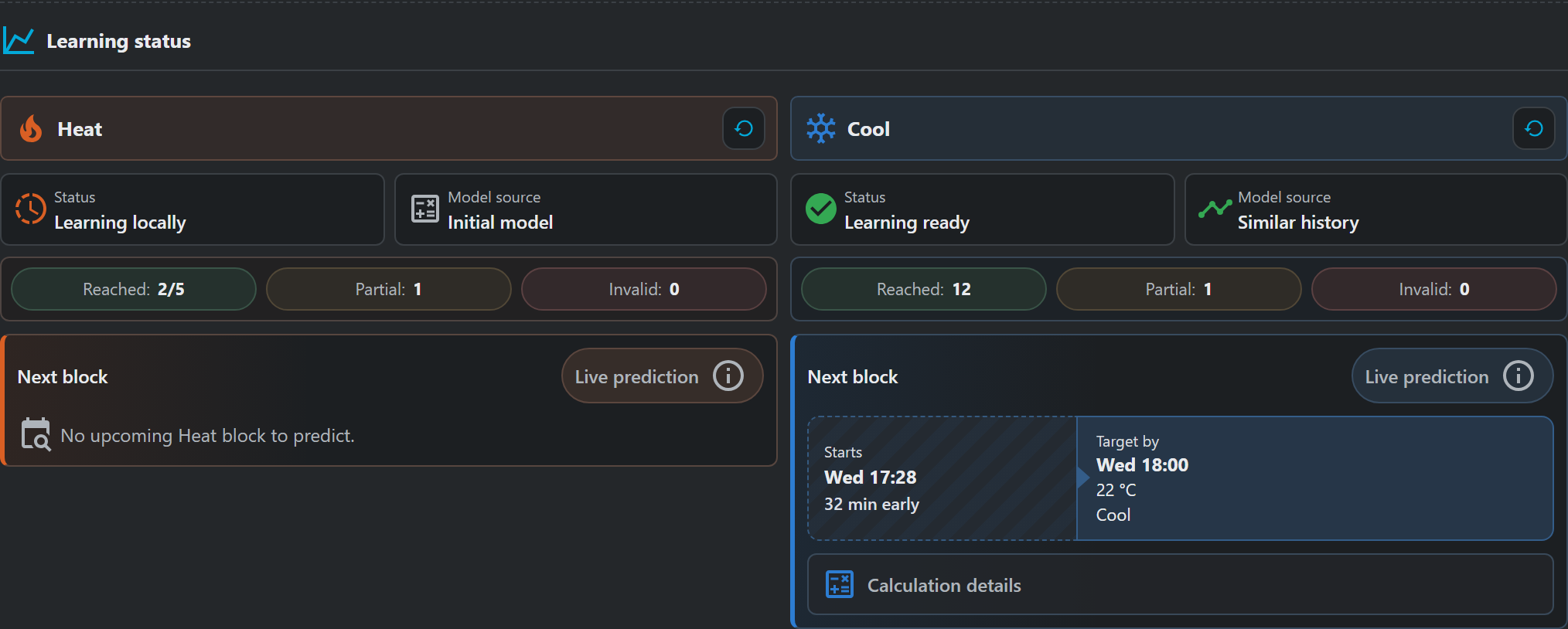
Velair can learn how long a managed zone usually takes to reach a scheduled target. Learning remains local, and the panel shows the planned lead time, learning status and observations behind it.

Adaptive behavior is optional and depends on sufficient observations from the selected room.

Velair Adaptive Preconditioning learning and plan details

Before you install

A few practical limits.

Your climate integration still matters

Velair sends commands through the climate entities already in Home Assistant. The integration behind each entity determines which modes, targets and options it supports.

Local-first is not the same as offline

Schedules and decisions do not require a Velair account or cloud. A device exposed through a vendor cloud still depends on that connection.

Occupancy stays flexible

Use Profiles, Modes and pause actions from regular Home Assistant automations or the optional blueprints. Velair does not try to replace your presence logic.

Installation

Available in the default HACS store.

The integration and its sidebar panel are installed together. No separate dashboard card is required.

  1. 1
    Download

    Find Velair in HACS and install it.

  2. 2
    Restart

    Restart Home Assistant so the custom integration is loaded.

  3. 3
    Configure

    Add Velair, select managed climates and open the sidebar panel.

Cristian Gonzalez Fernandez

Behind Velair

Built and maintained by Cristian Gonzalez Fernandez.

I like building tools for the small, recurring problems I encounter in daily life.

Velair is the first of those projects I have chosen to share openly. I maintain it in my free time, alongside work and daily life, and take care to document and test it for homes beyond my own.

Community project

Real homes find the edge cases.

If Velair behaves unexpectedly with your climate integration, include a short description, the relevant entity states and logs in the issue.